
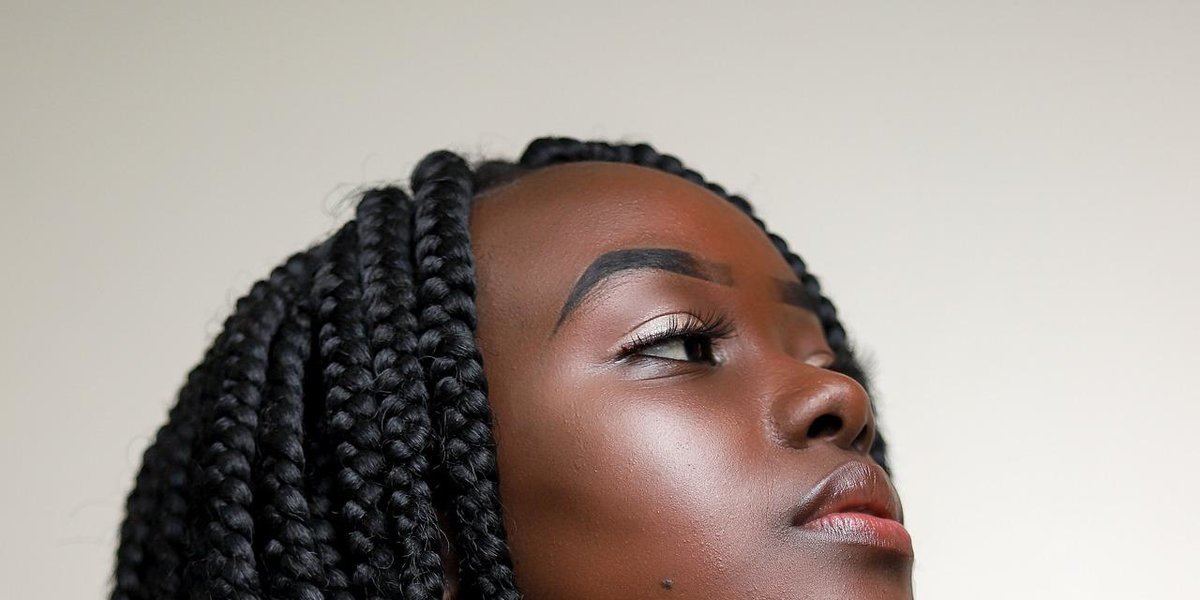
Getting braids, box braids, or even extensions might seem like a simple decision. However, there are crucial guidelines to follow and factors to consider before you commit. The health of your hair depends on it!
Getting box braids can be an excellent way to switch up your style and protect your hair from damage; it's a great protective hairstyle if done correctly. Braids are a popular option for both these reasons,
This hairstyle can be done on all hair types:
- kinky hair
- frizzy hair
- curly hair
- straight hair
- Short hair (at least 4 or 5 cm)
- Long hair
- natural or relaxed hair (paying even more attention)
However, if you have damaged, brittle hair, or are experiencing hair loss, clearly do not risk worsening the situation by getting box braids. In this case, take the time to understand your hair, repair it with suitable treatments, and opt for afro hairstyles without extensions such as simple braids, twists, or cornrows until your hair regains its full health.
What are box braids?
Box braids are a type of afro braid created by dividing the hair into small square or rectangular sections. The hair is then braided into individual braids, starting from the nape of the neck. Once all the hair has been braided, the individual braids are then "boxed," which is a type of hairstyle primarily worn by Black women.
There are obviously different ways to create this hairstyle, but the key is to start with small, regular sections of hair. The smaller the sections, the more intricate and defined your braids will be. If you want a more relaxed look, you can opt for larger sections.
Why are they called box braids?
There are several theories, but the most prominent one relates to the origin of the word "braid." The word "braid" is derived from the Old English "brædan," which means "to embroider." So, in essence, braids are like tiny embroideries on your hair.
Let's now look at the 4 main mistakes to avoid before getting braids with hair extensions.
Mistake #1: Not doing hair care before getting box braids
The scalp and lengths must be clean. Do not leave your hair dry and free of moisturizing and nourishing hair products; they will provide a protective effect to your hair throughout the duration of your afro hairstyle. Whatever your hair type—kinky, frizzy, curly, or straight—start by washing your hair with a clarifying shampoo to remove chemical residues and accumulated dirt at the root. Then, apply a moisturizing/nourishing mask or conditioner to replenish your hair with lipids and hydrate it. The hair routine doesn't stop there; apply the LOC or LCO Method, which involves a leave-in treatment, a moisturizing cream or milk to maximize hydration, and then finishing with an oil, serum, or butter (Shea Butter) to seal it in.
Wait until your hair is completely dry before starting the braids; get your hair styled the next day or the day after to be sure.
Don't forget to gently detangle your hair during treatments with the right techniques; styling will be much simpler and will prevent your lengths and ends from breaking.
Mistake #2: Not washing your hair extensions before going to your afro hairstylist or afro hair salon
It's not just your own hair that needs cleaning! I had never thought about it until an afro hairstylist asked me to do it. It's possible that the hair extensions you buy in stores have questionable hygiene. For safety, whether they are synthetic or human hair, give them a quick shampoo and let them dry for the necessary time. After doing this, I did notice less scalp itching. I recommend it.
Mistake #3: Pulling hair too tightly during the styling session
Pulling hair too tightly during braiding sessions can eventually lead to alopecia (hair loss). Indeed, constant traction on the root detaches the hair from the papilla, shortening the hair's life cycle initially, and sometimes leading to hair that no longer grows back afterwards.
Taking care of your hair also means being clear with your stylist when you think they are harming it, for example, by telling them to stop if they are pulling your hair too hard. Some people might tell you that if you don't pull your hair tightly, your hairstyle won't last long, that the braids will unravel faster, etc. No, braiding does not require tearing out hair follicles.
The consequences can be uncomfortable all night after your styling session; you risk suffering because the braids are too tight, your hair will break at the root, or worse, cause hair loss.
Keep in mind that these are your hairs that you want to keep as long as possible and in good health, moreover.
Mistake #4: Wearing African braids for too long
Wearing African braids for more than 8 weeks can damage your hair. Indeed, this hairstyle puts significant tension on the scalp, which can lead to irritation, inflammation, and even hair loss.
If you want to keep your African braids for a long time, be sure to take care of your scalp and hair by washing them regularly, massaging your scalp with a nourishing oil, and using a soft-bristle brush to prevent tangles.
Mist them daily, otherwise your hair risks becoming dry and damaged.
When you remove your African braids, be sure to give your hair a good deep treatment, intense hydration to replenish lost moisture.
Avoid washing your hair too often. Washing hair strips it of its natural oils and can cause braids to loosen.
Checklist before you start:
1 - Do a hair treatment
2 - Wash your extensions
3 - Be gentle with your hair; there's no need to braid too tightly
4 - Wear your braids for 2 to 3 weeks (beyond that, you risk stressing your hair follicles)
Do you have other tips? Feel free to share them in the comments below!